
Dentistry
Dental simulation lab: phantom head and camera
Phantom head, monitor, intraoral camera, microscope — every workstation in a dental simulation lab produces an image the whole class needs to see.
Term and layout
What defines a dental simulation lab
A dental simulation lab is a classroom made up of phantom head workstations: the phantom head reproduces the treatment situation, and each position carries a monitor plus either a computer, an intraoral camera or a microscope as its image source.
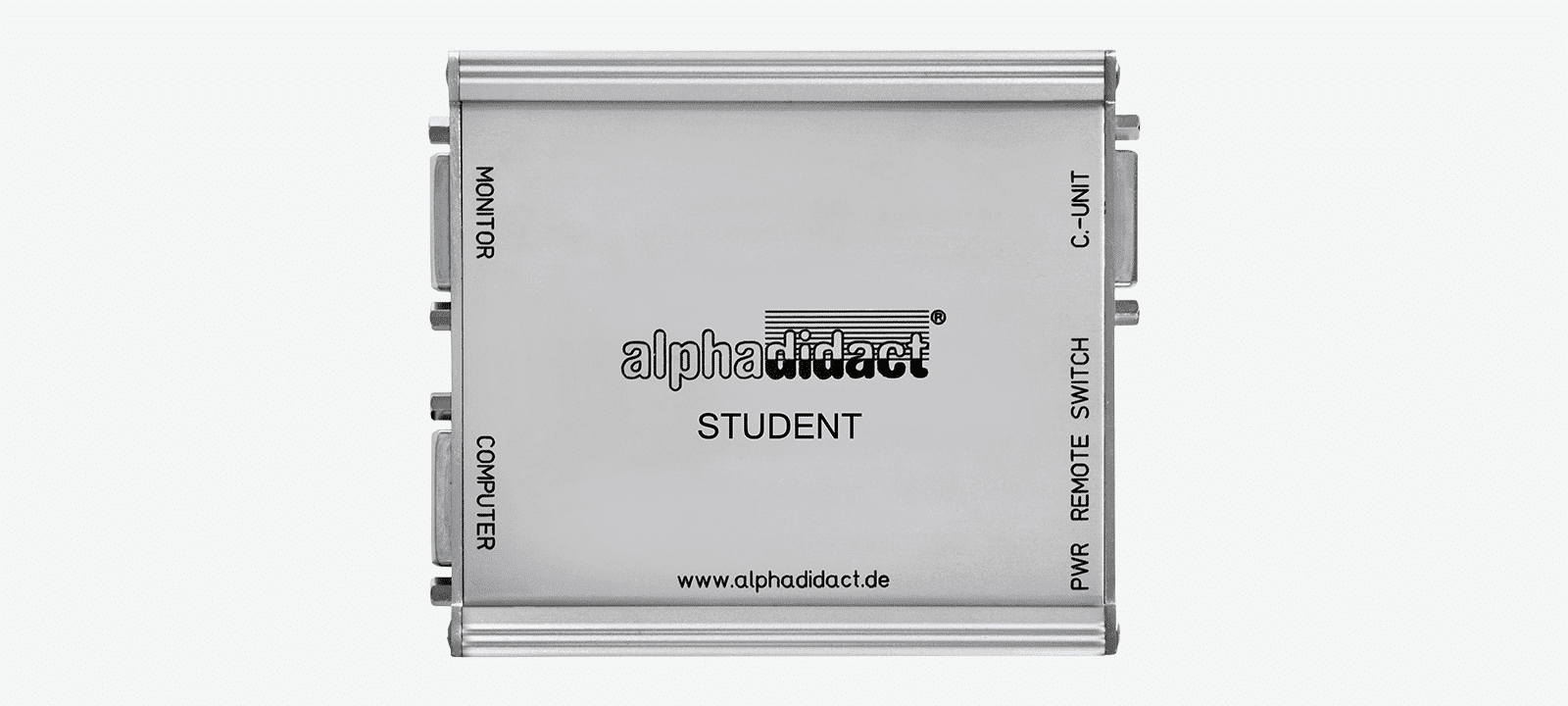
alphadidact® Digital connects these positions as a system of its own. Each workstation has a box that takes in the image and passes it on, and the image from any one position can be placed on all the others. The signal carried is uncompressed HDMI with audio.
Laboratories of this kind are delivered together with the manufacturers of the treatment units. They are built where teaching happens: at dental faculties, in university dental clinics and in training institutions extending an existing lab or fitting out a new building.
Training film
A simulation lab in use
The film walks through a dental simulation lab: work at the phantom head workstation, the image from the camera, the view through the microscope. It is available in German, English and French.
Plan a dental simulation labIn class
What connecting the positions changes
Four situations that occur daily in a dental simulation lab.
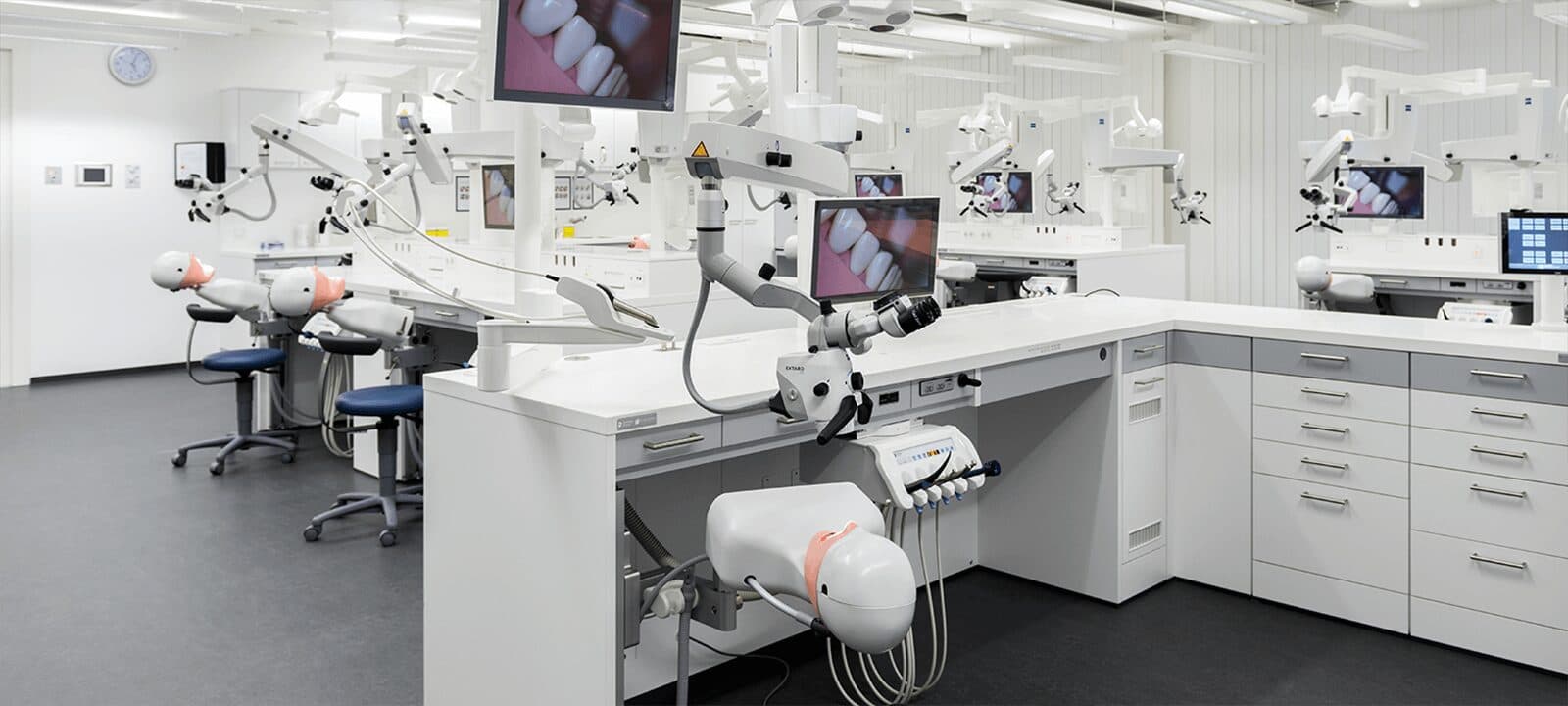
01Demonstration
The instructor's preparation on every monitor
The image from the instructor's position appears on all monitors in the room at the same time. Students stay at their own workstation and see the procedure at the same resolution as at the source, instead of crowding around one treatment unit.
02Intraoral camera
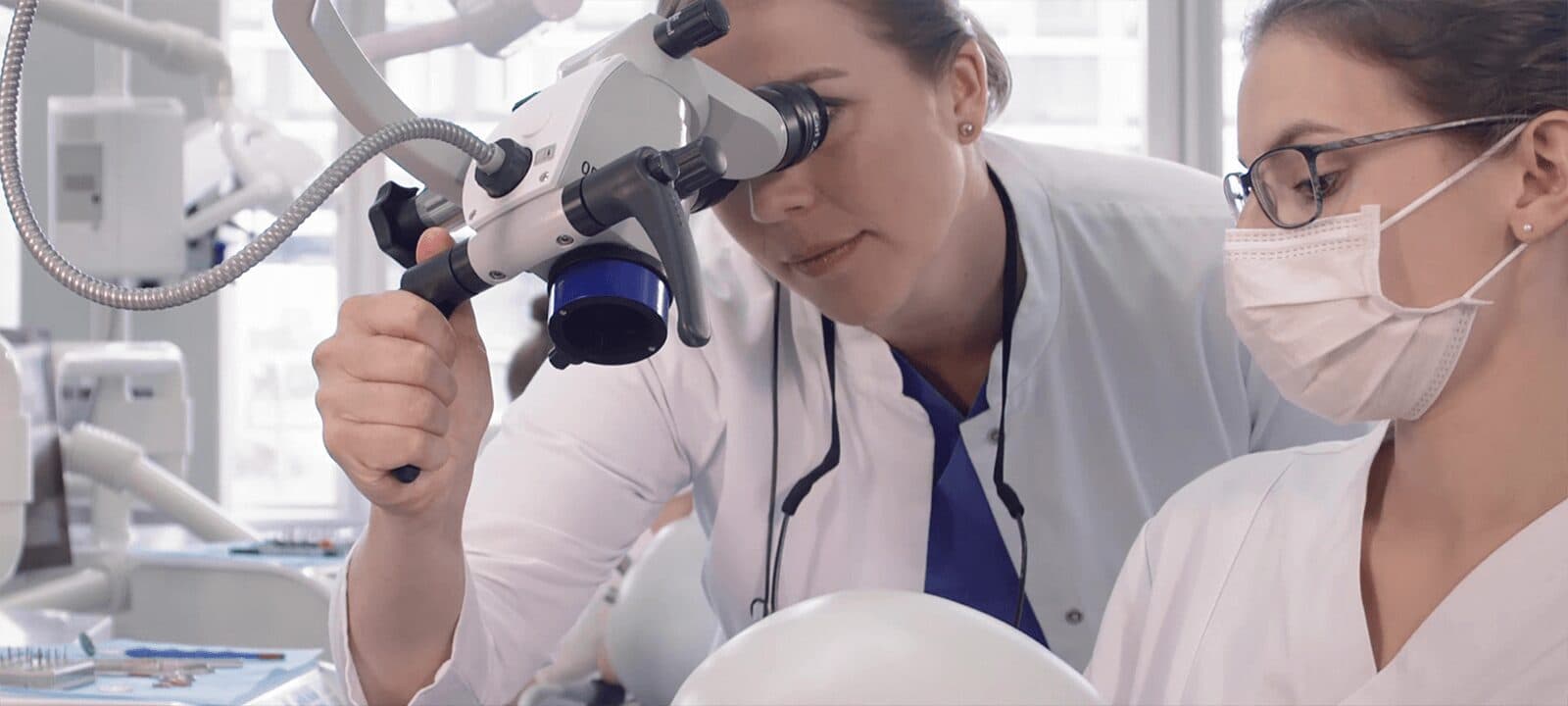
The image from inside the mouth as a source
An intraoral camera at a workstation is a source like any other and can be switched to every position. Camera and microscope images stay uncompressed all the way to the monitor: there is no encoding to cost time and no buffer to hold it back.
03Live treatment
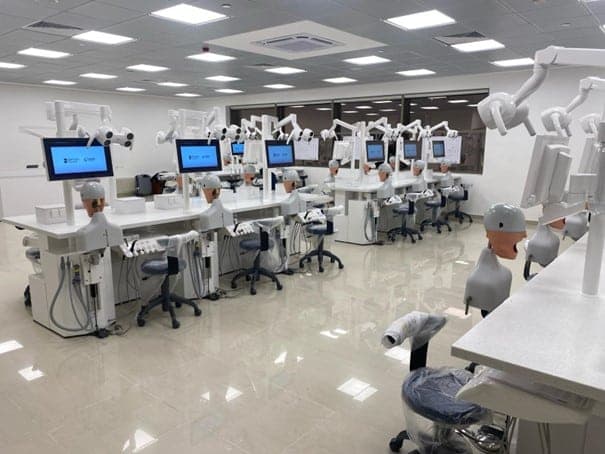
Treatment room and lab on one system
A live treatment room can be mirrored into the same lab. The route there runs over DVI cabling, with extenders and repeaters reconditioning the video signal on the way. No network is involved, and the class watches the treatment without standing in the treatment room.
04Installation
Connections that stay screwed down
The sockets on the boxes are DVI-D and can be screwed down. In a permanently installed system the connection therefore stays where the engineer put it. The equipment carries three years of warranty, extendable to five years; manufacturing takes place in Heusenstamm.
Planning
Three details from which a quotation is built
The full checklist is on the page about planning a dental simulation lab. For a first conversation, these three points are enough.
Count the positions
The number of phantom head workstations determines how the system is laid out. A star layout carries up to 100 workstations via satellites, a ring up to 50 student positions.
- Number of student positions in the room
- Fixed instructor position or a changing source
- Adjacent rooms that should be switched in
Define the sources at each position
A workstation can hold more than one source. Which of them should be shown to the class decides how many inputs the box needs.
- PC or thin client at the position
- Intraoral camera
- Microscope with a camera
Agree on control and installation
The system is operated from a touchscreen, a system keyboard or a tablet. Where the boxes sit and how the cables run is agreed with the manufacturer of the treatment units.
- Control unit at the instructor position
- Cable routes inside the treatment units
- Connection to the building control system over RS232
Quotation
From the room plan to a quotation
A quotation needs the room plan, the number of phantom head workstations and the sources at each position. We handle the technical coordination with the manufacturer of the treatment units.
EBS Euchner, Heusenstamm near Frankfurt — manufactured in house, three years of warranty, extendable to five years.